Schools and Education
DBS checked electricians working after school, at weekends and through the holidays so teaching is not interrupted.
Emergency lighting
Are you looking for emergency lighting in Surrey for your commercial premises, whether that is installation, additions or annual testing? We would be glad to help.
We are NICEIC registered commercial electricians who install, extend and test emergency lighting systems.
Work with us and you can expect cover designed around how your building is actually used, monthly and annual duration testing carried out properly, logbook entries and certification kept up to date, and shortfalls reported plainly rather than buried.
So whether your premises is in Guildford, Woking, Reigate, Camberley or anywhere across Surrey, get in touch for a free, no-obligation chat to discuss your requirements and an estimate.
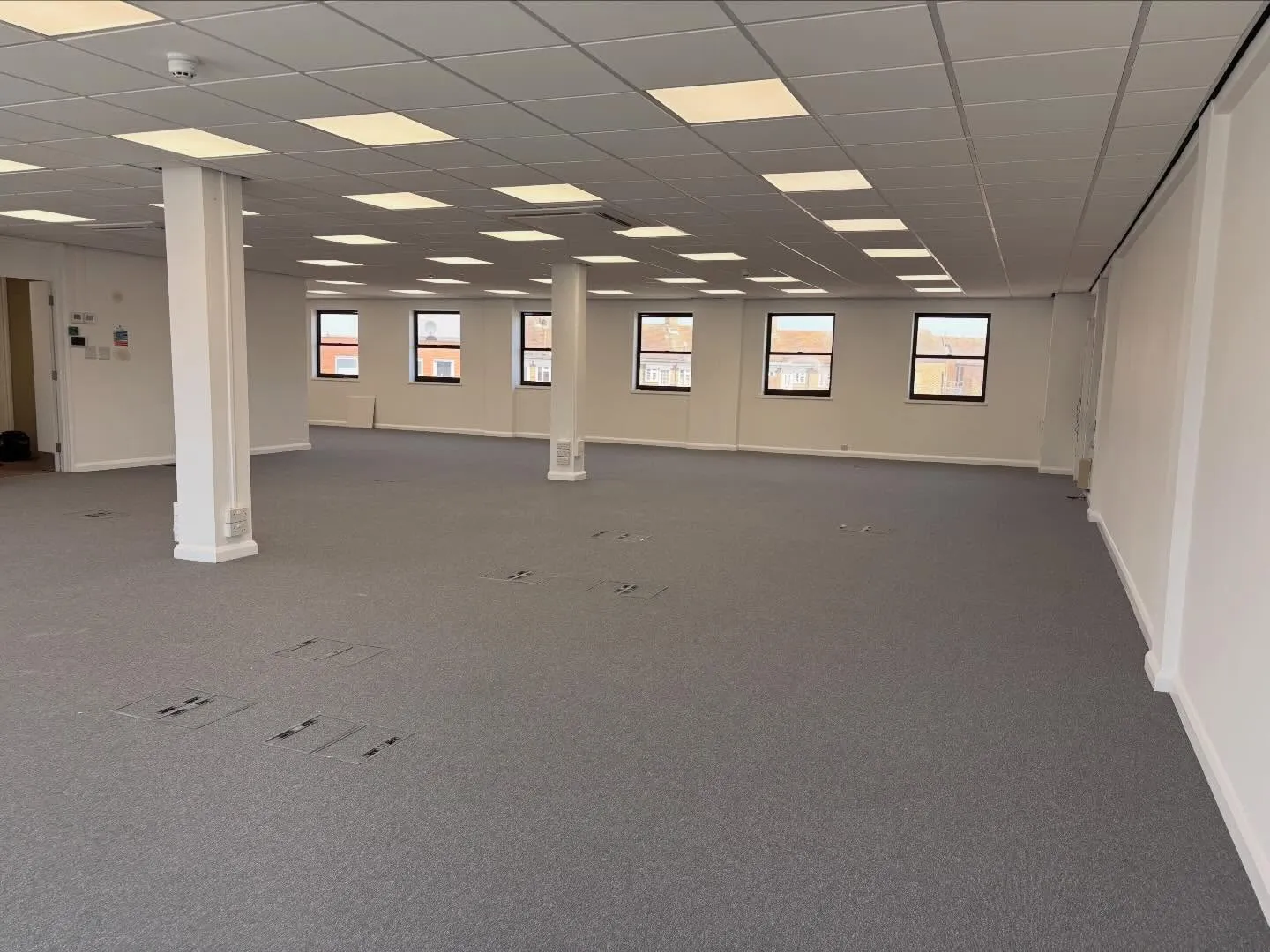
Completed office floor in Weybridge, Surrey. Lighting installed alongside the life safety systems.
Registered & checked




Why it gets neglected
Every other electrical system in your building tells you when it has failed. A light goes out. A socket stops working. A board trips. You find out immediately, because someone is inconvenienced.
Emergency lighting is the exception. It sits there for years doing nothing visible, and the only time it is asked to perform is the one occasion when the building is dark and full of people trying to leave. A fitting with a dead battery looks precisely the same as one that will run for its full rated duration.
That is the entire argument for testing it. Not paperwork for its own sake, simply the fact that there is genuinely no other way to know.
Testing
Emergency lighting maintenance rests on two tests at different intervals. They prove different things, and doing only the easy one tells you very little.
A short test that simulates a supply failure and confirms each fitting illuminates. Quick, low impact, and many premises do it themselves. It proves the fitting works. It says nothing about how long for.
The fittings are discharged for their rated duration, commonly three hours, and must still be providing light at the end. This is the test that finds degraded batteries.
The system needs time to recharge, during which it is not offering full protection. That is why the annual test is planned rather than improvised.
Results go in the logbook. A test nobody wrote down is a test you cannot evidence when someone asks.
Scope
Where it matters most
Emergency lighting matters everywhere, but the case is strongest in premises where the occupants are unfamiliar with the building.
In an office, most people know the route to the stairs because they walk it every day. In a shop, a restaurant or a hotel, they do not. They arrived twenty minutes ago, they are somewhere they have never been, and in hospitality the lighting is deliberately low, there are often changes of level, and they may have had a drink.
Schools are their own case: the occupants know the building well, but there are a great many of them, they are children, and they have to be moved in an orderly way rather than quickly.
All of which is a long way of saying the design should follow how your building is actually used, not a standard layout applied to a floor plan.
Working with us
Whether it is a new installation, an addition after a layout change, or annual testing.
Send us the premises type, what you need doing and when you need it done. If you have drawings, a schedule or a previous report, send those too.
We look at the installation, agree the scope with you and put it in writing. You get an estimate you can take to whoever signs it off.
We agree dates that suit your operation, turn up when we said we would, and hand over the certification when the work is finished.
Premises
DBS checked electricians working after school, at weekends and through the holidays so teaching is not interrupted.
Lighting, small power, floor boxes and testing in occupied workplaces, phased floor by floor around your staff.
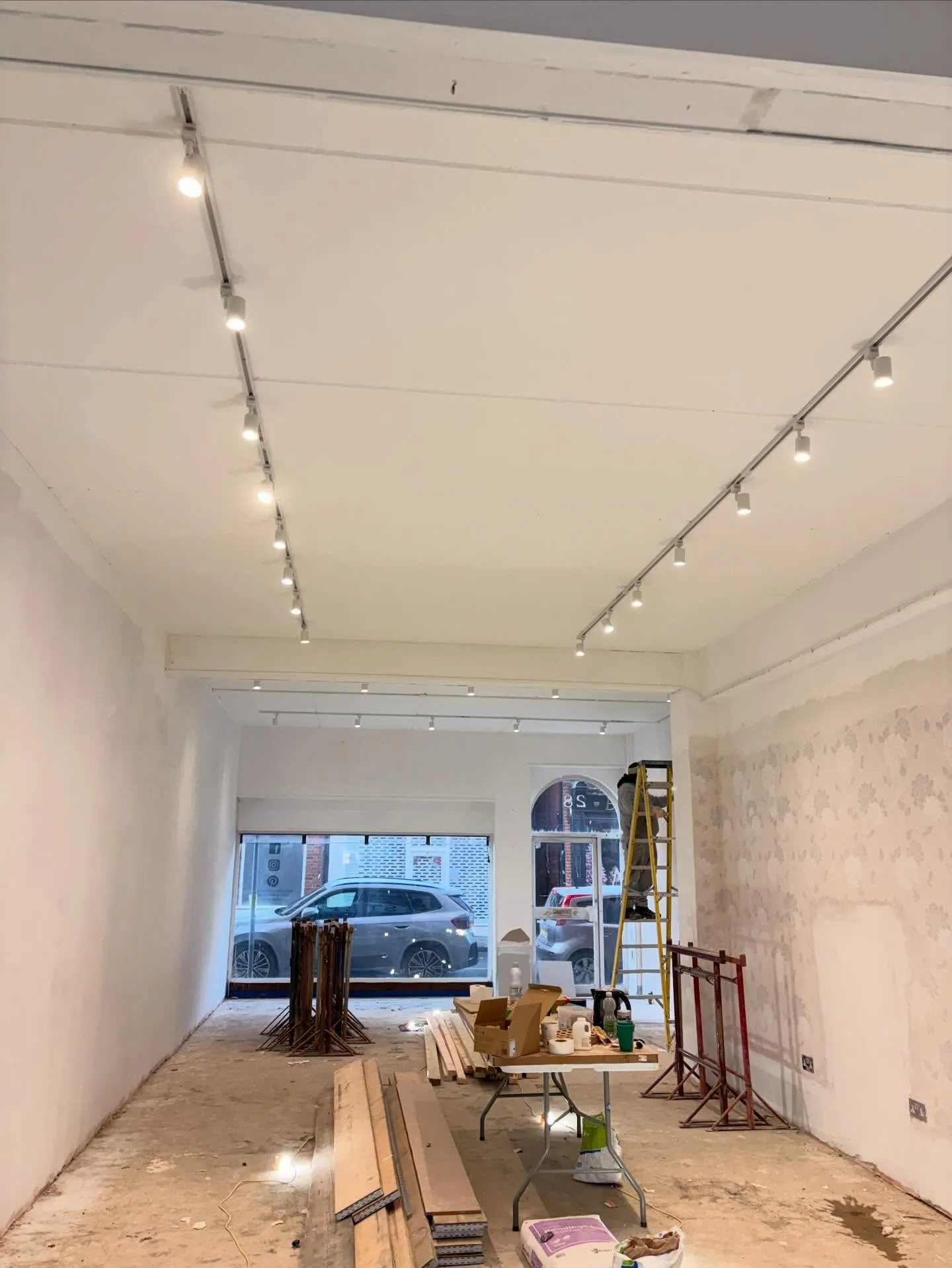
Shop fit-out wiring, display and track lighting, power and repairs, scheduled around your trading hours.
Power to kitchens and service areas, extract controls, lighting and testing for restaurants, cafés, pubs and hotels.
We install, extend and test emergency lighting throughout Surrey, in offices, schools, shops and hospitality premises. For the wider picture of what we do, see our commercial electricians in Surrey page.
Emergency lighting is frequently installed alongside general lighting and fire alarm work.
More services
Most jobs cross more than one of these. If yours does, say so when you enquire and we will estimate it as one piece of work.
New circuits, small power, distribution boards, three-phase supplies and full fit-out wiring for commercial premises.
LED replacement and new lighting installations for offices, schools, shops and hospitality premises across Surrey.
Periodic inspection and testing of your fixed installation, with a clear report you can act on and hand to your insurer.
Fault finding, repairs and planned maintenance that keep your premises trading and your staff working.
Partial and full rewires, distribution upgrades and containment renewal, phased so your premises stays open.
Fire alarm installation, extensions, alterations and servicing for commercial and education premises.
Get in touch
If you're in need of trusted commercial electricians, we'd be delighted to assist. Provide a little bit of information in the form below and we'll be back to you within 24 hours to discuss further. There is no charge for the conversation or the estimate, and no obligation to proceed.
Questions we get asked
What responsible persons and facilities managers ask us.
The established regime is a short functional test each month, and a full duration test annually where the fittings are discharged for their rated duration, commonly three hours, and must still be working at the end.
The monthly test is quick and many premises carry it out themselves. The annual duration test takes the system out of service for the duration and needs recharging afterwards, so it is normally planned rather than squeezed in.
The responsible person for fire safety in the premises, which in most businesses is the employer, owner or occupier. In a leased building the split between landlord and tenant depends on your lease, and it is worth checking rather than assuming.
The practical test is simple: if nobody in your organisation can produce a logbook showing the tests have been done, the arrangement is not working regardless of what the lease says.
It is the record of your emergency lighting system: what was installed, when it was tested, what was found and what was done about it. It is the first thing anyone asks for when they want evidence the system is being maintained.
We complete the entries for the testing we carry out. If your building does not have a logbook, we can set one up as part of the first visit.
It shows the fittings are doing something, which is a start. What it does not tell you is whether the whole system still works, whether it will last its rated duration, and whether it actually covers the escape routes as they are used today.
Batteries degrade quietly. A fitting can illuminate for two minutes and fail well short of three hours, and you will not know without a duration test. Coverage also drifts as buildings get re-partitioned and layouts change.
Very possibly. Emergency lighting is designed around escape routes, exits, changes of level, stairs and specific points such as fire alarm call points and firefighting equipment. Move the partitions and you move the escape routes, and the fittings do not follow on their own.
This is one of the most common shortfalls we find. The system was correct when installed and the building has changed around it since.
It is usually the sensible way to do it. Access equipment is already up and the ceiling is already open, so the marginal cost is far lower than a separate visit later. See commercial lighting.
If you cannot show that your system works for its full duration, requesting your free estimate is the right next step.